Energy Security in Agriculture: A Technical Whitepaper on 24/7 Solar-Grid Hybrid Irrigation with Hober AC/DC Parallel Technology - Hober

أمن الطاقة في الزراعة: ورقة بحثية تقنية حول الري الهجين بالطاقة الشمسية والشبكة الكهربائية على مدار الساعة بتقنية هوبر AC/DC المتوازية

For South African agriculture, the last decade has been defined by a single, systemic challenge: انقطاع التيار الكهربائي. From the intensive citrus groves of Limpopo to the vast maize fields of the Free State, scheduled power outages have disrupted critical irrigation cycles, resulting in diminished crop quality and multi-million Rand losses. As the national grid remains unstable, commercial farmers are moving beyond simple ‘off-grid’ solar solutions toward more sophisticated Hybrid Parallel Architectures. Hobertek’s HSPH Series, featuring advanced AC/DC Hybrid Parallel Technology, provides the industrial-grade reliability needed to ensure that when the grid goes dark, the water keeps flowing.

1. The Crisis of Consistency: Why Standard Solar Pumping is Not Enough

While standard solar water pumps have gained popularity, they possess a fundamental limitation: they are slaves to the sun. In a commercial farming context, particularly for high-value export crops, irrigation must often follow a precise schedule that doesn’t always align with peak solar hours. Furthermore, during periods of heavy cloud cover or early morning starts, a purely solar system cannot provide the torque required to move large center pivot systems or pressurize high-volume drip lines.

In South Africa, the problem is compounded by Load Shedding. If a farmer relies on the grid and a power cut occurs during the peak irrigation window, the entire day’s production is at risk. Traditional solutions involved expensive automatic transfer switches (ATS) and diesel generators. However, these ‘OR’ logic systems (either Solar OR Grid) create mechanical stress on the pump motor during the switch-over and lead to energy waste. Hobertek’s ‘AND’ logic—where Solar and Grid work simultaneously—is the technological answer to this crisis.

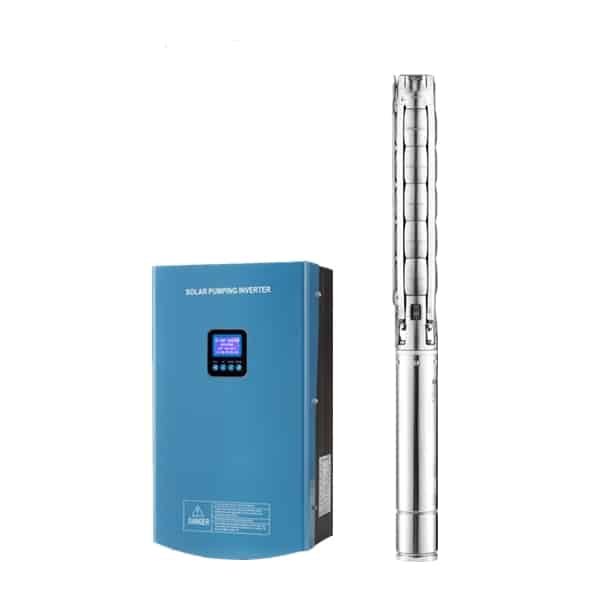
Hober hybrid solar pump system for South Africa
The Hober Hybrid architecture ensures zero downtime for South African commercial farms.

2. Technical Breakdown: The AC/DC Hybrid Parallel Algorithm

At the heart of the Hober HSPH inverter is a proprietary Dynamic Power Balancing Algorithm. This system allows the inverter to accept two inputs simultaneously: a high-voltage DC input from the solar array and a 3-phase AC input from the grid or a diesel generator.

Solar Prioritization Logic

The system is programmed to prioritize ‘free energy’ from the sun. The internal MPPT (Maximum Power Point Tracking) controller extracts 100% of available solar power. If the solar energy is sufficient to drive the pump at the target frequency (e.g., 50Hz), the AC input remains in a ‘hot standby’ state with zero consumption from the grid.

Millisecond Balancing

When solar radiation fluctuates—due to passing clouds or the onset of sunset—the inverter does not ‘switch over’ to the grid. Instead, it supplements the shortfall. If the pump requires 15kW to maintain pressure, and the solar array is only producing 10kW due to cloud cover, the Hober inverter instantly draws exactly 5kW from the grid. This balancing happens at a sub-millisecond level, maintaining a perfectly stable output frequency and voltage to the pump motor.

3. Protecting the Investment: Eliminating Mechanical and Electrical Stress

Frequent stopping and starting of a large submersible pump is the primary cause of premature motor failure. In a Load Shedding environment, a pump might be forced to restart multiple times a day as the grid toggles. Each restart subjects the motor windings to high in-rush currents (up to 6x the rated current) and the mechanical components (bearings and impellers) to sudden torque spikes.

Hober’s hybrid parallel technology eliminates this stress through its Seamless Transition capability. Because the solar and grid inputs are blended internally, the motor never experiences a drop in voltage or frequency during a power transition. This solid-state management of energy sources extends the life of a standard borehole motor by an estimated 30-40%, significantly reducing the project’s long-term maintenance burden.

4. Industrial Scalability: From 2.2kW to 500kW Schemes

The Hober hybrid solution is not limited to small-scale applications. Our Industrial Cabinet Series (as detailed in our megawatt guide) brings this same hybrid intelligence to projects requiring hundreds of kilowatts. For South African commercial operations using massive pivot systems, the ability to scale hybrid pumping ensures that energy security is maintained even as the operation expands.

5. Remote Monitoring in the Karoo: The GPRS/4G Advantage

In many remote South African farming regions, physically checking a pump site can involve a two-hour drive. Hobertek provides an integrated GPRS/WiFi Monitoring Module. This allows farmers to:

  • Monitor real-time energy usage (Solar vs. Grid %).
  • Receive push notifications for Load Shedding events or system faults.
  • Adjust the pressure and flow settings remotely via the Hober mobile app.

Conclusion: The Future of South African Irrigation

In an era of energy uncertainty, Hobertek’s AC/DC Hybrid Parallel technology is no longer a luxury—it is a necessity for commercial survival in South Africa. By blending the cost-efficiency of solar with the reliability of the grid, we provide a 24/7 irrigation solution that is both sustainable and secure. Download our full Technical Whitepaper and request a custom quote for your South African farm project here.

فيسبوك
تويتر
ينكدين
واتساب
رديت

أخصائي المضخات الشمسية

نحن خبراء في صناعة المضخات الشمسية. إذا كنت تعتقد أن لديك مشكلة في ذلك، فاتصل بنا للحصول على عرض أسعار مجاني وغير ملزم.

اشترك في نشرتنا الإخبارية.

alt="Hobertek Solar AC Pump | Solar Water Pump Manufacturer"

اطلب اقتباس

*معلومات بريدك الإلكتروني آمنة تمامًا ولن يتم الكشف عنها لأطراف ثالثة لأي سبب من الأسباب.