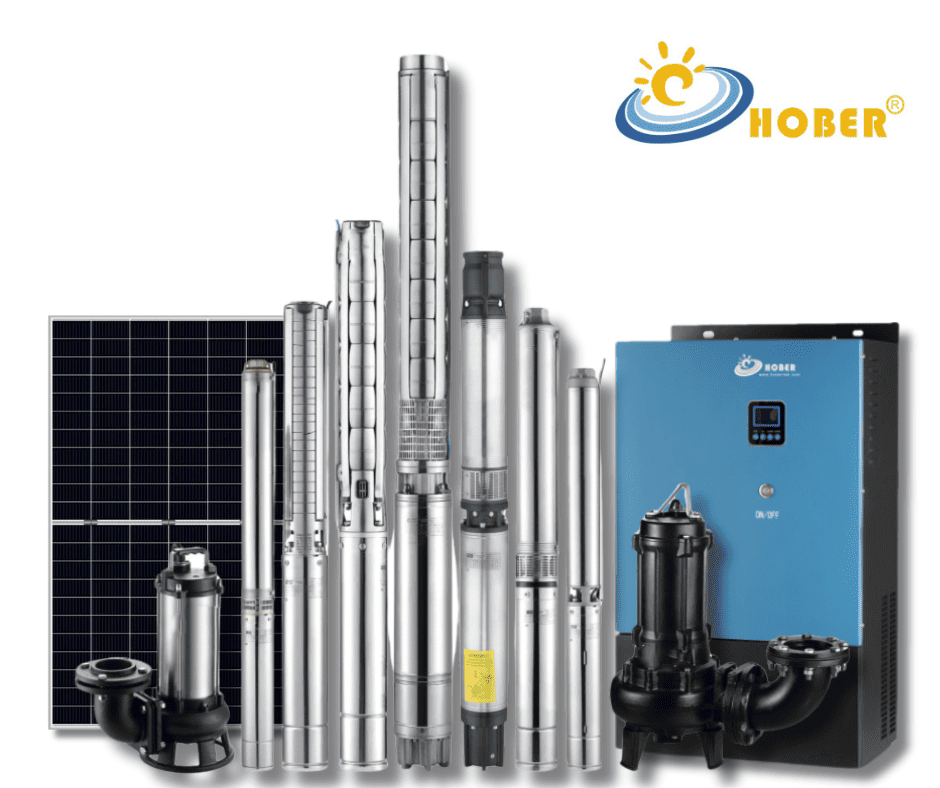
Para dimensionar un inversor para bomba solar, siga cuatro reglas:
- 1. Relaciona la fase — monofásico → HSPH-L, trifásico → HSPH-H.
- 2. Potencia del inversor — igual o hasta 1,2 veces la potencia de la bomba.
- 3. Conjunto fotovoltaico — tamaño aproximadamente 1,5 veces la potencia de la bomba.
- 4. Cable largo (>100 m) — agregar un reactor de corriente alterna para controlar la caída de tensión.
Seleccionar correctamente un inversor para bomba solar es el paso más crítico para garantizar la fiabilidad y la longevidad de un sistema de bombeo de agua solar. Para distribuidores e instaladores, un inversor sobredimensionado aumenta los costes innecesarios del proyecto, mientras que uno subdimensionado provoca paradas frecuentes del motor y posibles fallos de hardware. Cómo dimensionar un inversor para bomba solar Una configuración correcta permite ofrecer soluciones de alto rendimiento que minimizan las devoluciones de llamada técnicas.
Como fábrica especializada con 16 años de experiencia y 5 líneas de producción automatizadas, HOBER ha diseñado la serie HSPH para simplificar este proceso de selección. Siguiendo unas pocas reglas estándar de la industria, puede garantizar que su sistema funcione con la máxima eficiencia incluso en entornos difíciles. Para un cálculo rápido adaptado a su proyecto específico, le recomendamos utilizar nuestra Herramienta de dimensionamiento de bombas solares HOBER.
Reglas de dimensionamiento de inversores para bombas solares: un vistazo
La siguiente tabla resume los parámetros de dimensionamiento principales que los ingenieros de HOBER utilizan para seleccionar un inversor adecuado para una bomba. Estas son las reglas de referencia rápida que nuestros distribuidores aplican en cada proyecto.
| Parámetro | Regla | Por qué |
|---|---|---|
| Potencia del inversor frente a potencia de la bomba | Inversor kW ≥ bomba kW, mantener dentro de 1,0–1,2× | Evita atascos y costes innecesarios. |
| Bomba monofásica (220V/240V) | Utilice la serie HSPH-L. | Coincidencia de fases |
| Bomba trifásica (380V/400V/440V) | Utilice la serie HSPH-H. | Coincidencia de fases |
| Tamaño del conjunto fotovoltaico | ≈ 1,5 veces la potencia de la bomba | Cubre la pérdida de irradiancia |
| Recorrido de cable > 100 m | Añadir reactor de CA de salida | Suprime la caída de tensión / dv-dt |
| Gama de potencia disponible | 0,75 kW – 500 kW (HSPH) | Cubre proyectos de cualquier envergadura. |
Sincronización de fase y voltaje: El primer obstáculo
Antes de considerar la potencia, debe coincidir la fase y el voltaje del motor de la bomba existente o planificada. En la industria del bombeo solar, la falta de coincidencia de fases es una causa común de retrasos en la instalación. En HOBER, clasificamos nuestros inversores HSPH en dos series principales para abordar este problema:
- Bombas monofásicas (220V/240V): Estos requieren el HSPH-L serie, que se utiliza normalmente para el suministro de agua residencial o la agricultura a pequeña escala, donde la infraestructura monofásica es lo habitual.
- Bombas trifásicas (380V/400V/440V): Estos requieren el HSPH-H serie, los pilares fundamentales de los proyectos de riego a gran escala y los proyectos de agua comerciales.
Antes de seleccionar la serie de inversores, verifique siempre los datos de la placa de características de la bomba para garantizar la plena compatibilidad con la configuración del bobinado interno del motor.
Dimensionamiento de la potencia: La regla de eficiencia “1,2x”
Al determinar Cómo dimensionar un inversor para bomba solar capacidad, la regla técnica más importante es que la La potencia del inversor debe ser mayor o igual que la potencia de la bomba.. Sin embargo, existe un punto óptimo para un retorno de inversión óptimo. Los ingenieros de HOBER recomiendan mantener la potencia del inversor dentro de 1,0x a 1,2x de la potencia nominal de la bomba.
Por ejemplo, si va a instalar una bomba de 7,5 kW, un inversor de 7,5 kW o 11 kW es el adecuado. Si bien técnicamente es posible usar un inversor de 30 kW para una bomba de 7,5 kW, esto supone un desperdicio de recursos y reduce la sensibilidad de la protección del motor. Por otro lado, un inversor demasiado pequeño tiene dificultades con la alta corriente de arranque (corriente irruptiva) de los motores de inducción, lo que provoca errores de sobrecarga o baja tensión durante el funcionamiento a primera hora de la mañana o a última hora de la tarde.
Consideración de la dinámica de la carga hidráulica y del flujo
Si bien el inversor se encarga de la conversión eléctrica, su dimensionamiento se ve afectado indirectamente por las exigencias físicas del proyecto: la altura dinámica total (TDH) y los requisitos de caudal diario. Un sistema que bombea agua a través de un pozo de 200 m de profundidad somete al motor y al inversor a una tensión mucho mayor y más constante que una aplicación de transferencia superficial.
- Cabezal estático: La distancia vertical desde la fuente de agua hasta el punto de descarga.
- Reducción: El descenso del nivel del agua durante el bombeo.
- Pérdida por fricción: Resistencia causada por el diámetro y la longitud de la tubería.
Si su proyecto implica tendidos de cables largos (que superen los 100 metros), también debe considerar la caída de tensión. En tales casos, HOBER recomienda emparejar su Inversor de bomba solar HOBER Con un reactor de CA para proteger el aislamiento del motor y garantizar un suministro de energía estable a distancia.
Preguntas frecuentes
¿Qué tamaño de inversor necesito para una bomba solar de 3 HP?
Una bomba de 3 HP consume aproximadamente 2,2 kW, por lo que necesita un inversor con una potencia nominal de 2,2 kW o ligeramente superior (hasta unos 2,6 kW). Asegúrese de que la fase sea la correcta: HSPH-L para monofásica y HSPH-H para trifásica. Combínelo con paneles solares de aproximadamente 3,3 kW.
¿Puede el inversor ser más grande que la bomba?
Sí, el inversor debe tener al menos la misma potencia que la bomba, pero HOBER recomienda que no supere 1,2 veces la potencia de la bomba. Un inversor mucho más grande supone un derroche de presupuesto y reduce la precisión de la protección del motor.
¿Necesito un reactor de CA?
Añada un reactor de CA de salida cuando la longitud del cable entre el inversor y la bomba supere los 100 metros. Este dispositivo suprime la caída de tensión y los picos de alta frecuencia (dv/dt) que dañan el aislamiento del motor.
¿Cuántos paneles solares necesita un inversor para bomba solar?
Dimensiona el conjunto fotovoltaico a aproximadamente 1,5 veces la potencia de la bomba para compensar las variaciones de irradiancia y las pérdidas del sistema. Por ejemplo, una bomba de 5,5 kW necesita aproximadamente 8,25 kW de paneles.
Asóciate con el líder de fábrica con 16 años de experiencia.
HOBER ofrece mucho más que hardware; brindamos total confianza en ingeniería. Como fabricante certificado ISO 9001, apoyamos a nuestros distribuidores globales con documentación técnica completa y planos CAD para licitaciones de gran envergadura. Nuestra serie HSPH está diseñada para ofrecer fiabilidad las 24 horas del día, los 7 días de la semana, en los climas más extremos del mundo, desde Oriente Medio hasta el África subsahariana.
- Protección del territorio: Apoyamos a nuestros socios mayoristas consolidados con oportunidades de proyectos exclusivas.
- Gama de potencia completa: Soluciones personalizadas de armarios para inversores (75 kW–500 kW) para proyectos municipales de gran envergadura.
- Logística global: Amplia experiencia en exportaciones a África, el sudeste asiático y Sudamérica.
¿Listo para actualizar su próximo contrato de riego?
Contacte con el soporte técnico de HOBER. Solicite hoy mismo nuestro catálogo de productos 2026 y la lista de precios para distribuidores mayoristas. Nuestros ingenieros están listos para ayudarle con el dimensionamiento técnico y la preparación de la lista de materiales.