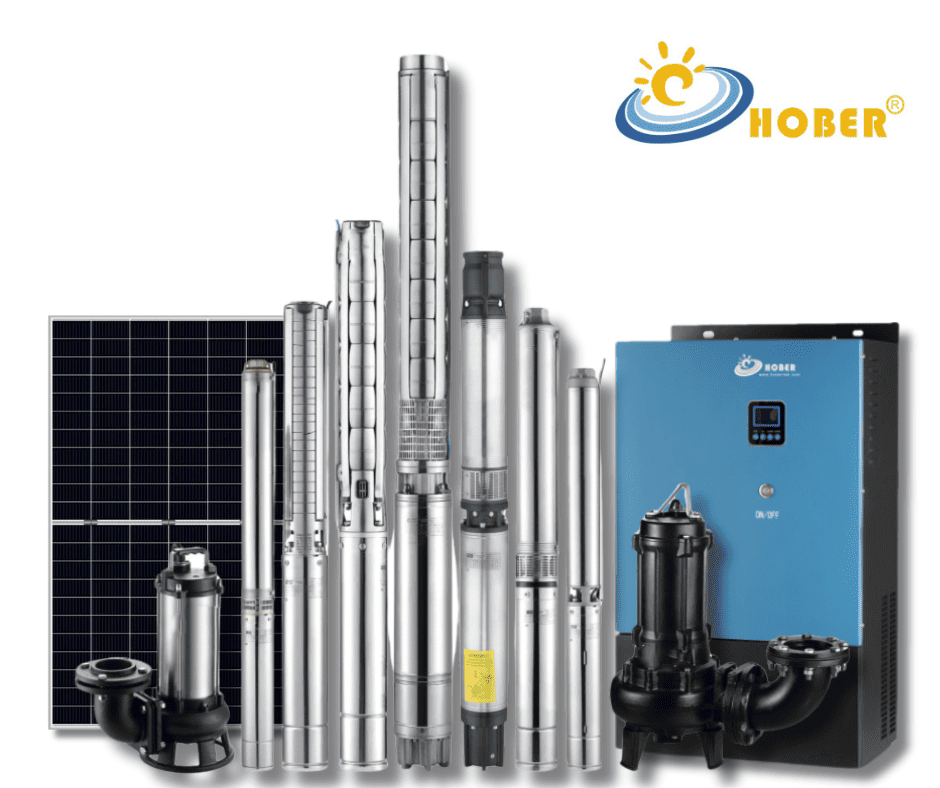
Las zonas agrícolas y mineras del Perú están definidas por el majestuoso pero implacable terreno de la Cordillera de los Andes. Desde las terrazas de papa de Cusco hasta las extensas llanuras ganaderas de Puno, los proyectos de bombeo de agua suelen operar a altitudes que superan los 3500 a 4500 metros sobre el nivel del mar (msnm). Si bien la radiación solar a estas alturas es intensa, el entorno físico representa un enemigo silencioso para la infraestructura electrónica: Aire enrarecido. La altitud elevada no es solo un indicador geográfico; es una variable crítica en el diseño de la electrónica de potencia. Los inversores solares estándar, diseñados para operar a nivel del mar, suelen fallar o sufrir sobrecalentamiento crónico en la sierra peruana. Este documento técnico explora los desafíos termodinámicos del bombeo solar a gran altitud y detalla las estrategias de ingeniería utilizadas por Hobertek para garantizar el funcionamiento continuo en el Altiplano.
1. La física de la altitud: por qué la densidad del aire es importante para la refrigeración.
A 4.000 metros, la presión atmosférica es aproximadamente 40% menor que a nivel del mar. Esta reducción de la presión se correlaciona directamente con una disminución de Densidad del aire. En el caso de la electrónica de potencia, como los inversores solares, el aire es el medio principal para transportar el calor lejos de los componentes internos (IGBT, condensadores y transformadores).
La capacidad de enfriamiento del aire se define por el caudal másico de aire que pasa sobre las aletas del disipador de calor. Dado que el aire es más denso en los Andes, hay menos moléculas de aire por metro cúbico para absorber y disipar la energía térmica. En consecuencia, un inversor que funciona a plena carga a 4000 m experimentará temperaturas internas significativamente más altas que la misma unidad que funciona a 0 m. Sin una lógica especializada para grandes altitudes, esto conduce a un rápido calentamiento. Reducción de potencia térmica, where the system throttles its power output precisely when irrigation demand is at its peak. Hobertek’s Arquitectura de triple refrigeración is designed to overcome this atmospheric barrier.
2. El modelo de reducción de potencia a gran altitud de Hober: La regla de 1,25x
Para proporcionar energía confiable en la sierra peruana, los ingenieros de Hobertek han desarrollado un sistema específico. Curva de reducción de potencia en altitud. Como norma general de ingeniería para los Andes, recomendamos lo siguiente: Regla de escalado de potencia de 1,25x:
| Altitud (msnm) | Pérdida de eficiencia de refrigeración | Sobredimensionamiento del inversor requerido |
|---|---|---|
| 0 – 2.000 m | 0 – 5% | Tallas estándar |
| 2.000 m – 3.500 m | 10% – 15% | Potencia nominal 1,15x |
| 3.500 m – 5.000 m | 20% – 30% | Potencia nominal de 1,25x a 1,35x |
Al sobredimensionar la capacidad del inversor (por ejemplo, utilizando un inversor Hober de 15 kW para un motor de bomba de 11 kW), garantizamos que los módulos de potencia operen dentro de sus márgenes térmicos seguros. Esta redundancia de diseño evita que el sistema active los sistemas de protección automática durante los periodos de intensa radiación ultravioleta, habituales en la estación seca peruana.
3. Arquitectura de triple refrigeración: convección natural + flujo dirigido.
De Hobertek Arquitectura de triple refrigeración IP65 Es especialmente adecuado para entornos de baja presión. Mientras que los competidores suelen depender de pequeños ventiladores internos que tienen dificultades para impulsar el aire enrarecido a través de estrechas rejillas de ventilación, Hober utiliza un ventilador enorme. Carcasa de aleación de aluminio combinado con disipadores de calor externos profundos.
- Carcasa conductora térmicaNuestra aleación de aluminio tiene una conductividad térmica 400 veces superior a la de los plásticos estándar, lo que permite que el propio chasis irradie calor, alejándolo de los componentes electrónicos, incluso cuando la convección del aire es limitada.
- Aire forzado externo dirigidoInstalamos un ventilador externo de alta durabilidad dirigido directamente hacia las aletas externas. Esto crea una corriente de aire de alta velocidad que compensa la baja densidad del aire, disipando el calor del núcleo sin comprometer el sellado IP65.
- Entrada sin polvo: In the mining and agricultural zones of Peru, fine mineral dust is pervasive. Our fully sealed design ensures that these particles never reach the circuit boards.

4. Installation Best Practices for the Peruvian Sierra
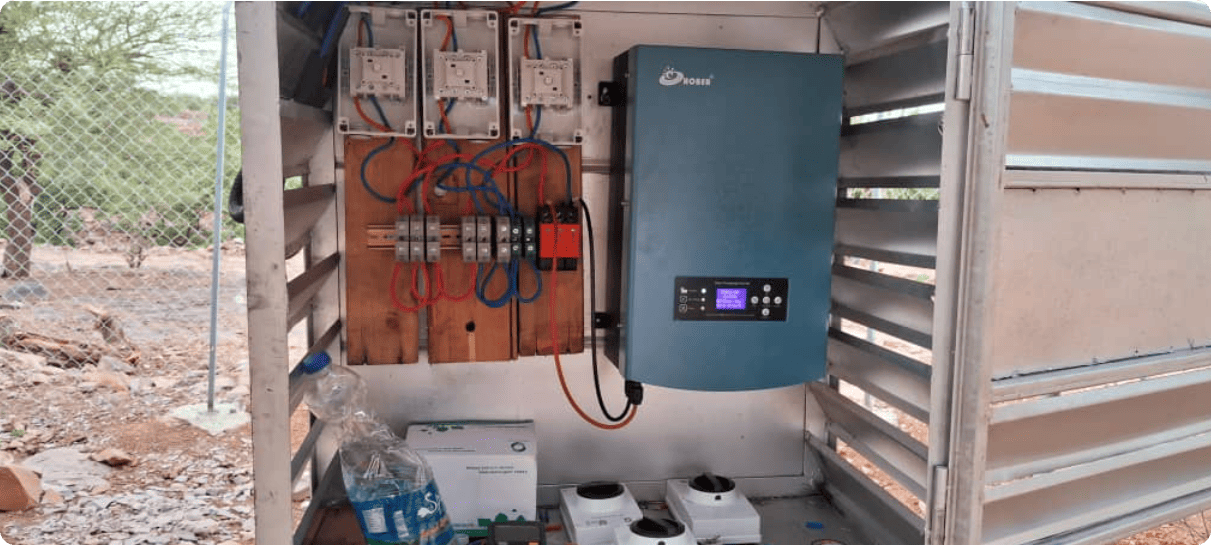
- Montaje vertical y efecto chimeneaPara optimizar el funcionamiento del ventilador externo, monte siempre el inversor en posición vertical con una separación mínima de 30 cm. Esto permite que el calor natural (convección) se distribuya uniformemente, complementando así el flujo de aire forzado.
- Protección solar UVUtilice un parasol de acero inoxidable para proteger la carcasa de aluminio de los rayos UV andinos directos, que pueden añadir una carga térmica innecesaria al chasis.
- Protección contra sobretensiones (SPD): The Andes are prone to sudden atmospheric disturbances. Every Hober HSPH unit comes with built-in Level-2 surge protection.
Hobertek es el referente de excelencia en riego solar de alta montaña en Perú. Download our Technical Altitude Guide and request a consultation for your Andes project here.