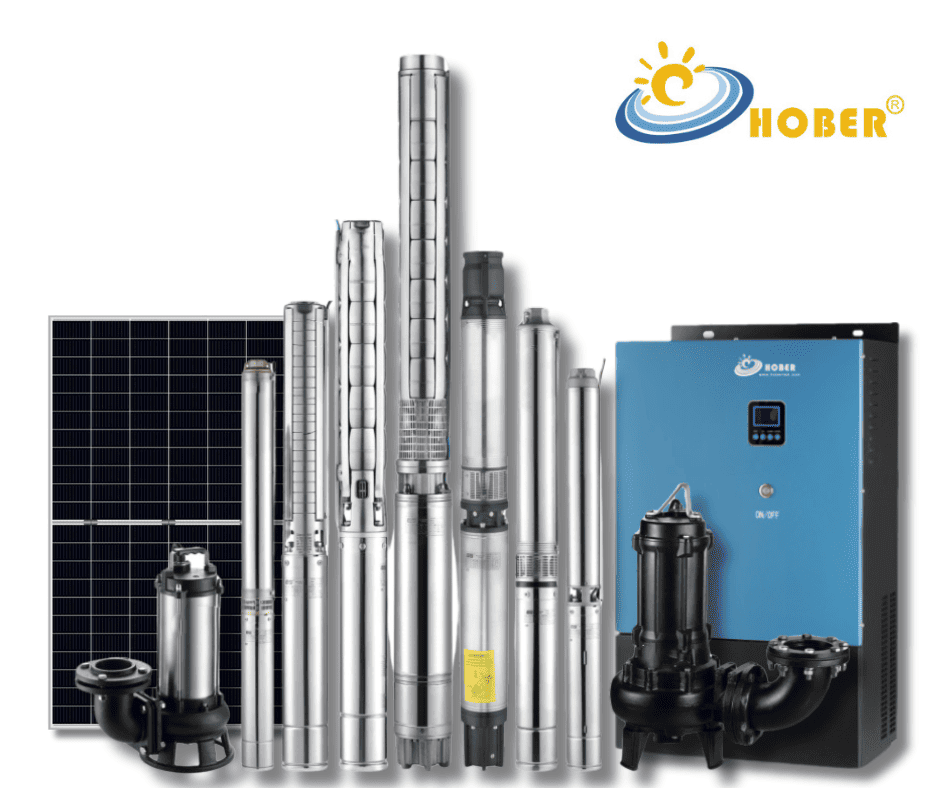
The first failure in a remote solar pumping project is often not the inverter. It is the assumption made before the inverter is selected. The water level was guessed, the old diesel pump was treated as a simple motor load, the cable route was underestimated, and nobody defined who would repair the system after commissioning.
Ethiopia and Mozambique show why a solar pump must be designed as a water system rather than sold as a box of equipment. Both markets have irrigation and rural water projects, local installation channels and competition from established solar-pumping brands. The opportunity for an EPC contractor is not to promise a generic pump. It is to build a system that a local technician can understand, protect and maintain after the project team leaves.
Planning an Ethiopia or Mozambique pumping project?
Send us the pump model, motor power, total head, required flow, water level and cable distance. HOBER can review the duty point and indicate whether the existing AC pump is suitable for solarization.
Request an AC pump solarization assessment · Review solar pump inverter options
Ethiopia: Replacing Diesel Requires More Than Changing the Power Source
Public search results show repeated solar-water-pump and irrigation procurement signals in Ethiopia. They also show local distribution and installation activity. IWMI has described a scaling partnership involving Rensys in Ethiopia, while Berhane Solar presents itself as an authorised distributor for Impact Pumps SolarPlex and Futurepump SF2. Other tender records include solar pumps, panels and related equipment, and older procurement records mention Lorentz solar water pumps.
These signals point to a real commercial issue: an Ethiopian buyer is not starting with a blank site. The buyer may already have a diesel pump, a borehole, a pipe route, an operator and a seasonal irrigation routine. The correct question is not simply “Which solar pump is cheapest?” It is “Which parts of the existing water system can be retained, which must be measured, and which protection functions are required before the fuel engine is removed?”
Before an EPC contractor sizes an inverter, the project file should contain static water level, dynamic water level, total head, required flow, pipe size, discharge pressure, motor nameplate data and daily water volume. A diesel engine may hide a poor duty point because the operator can change speed, throttle or runtime. An inverter-controlled motor will expose the same hydraulic mistake through low flow, overload or unstable operation.
Remote Sites Turn Serviceability Into a Design Requirement
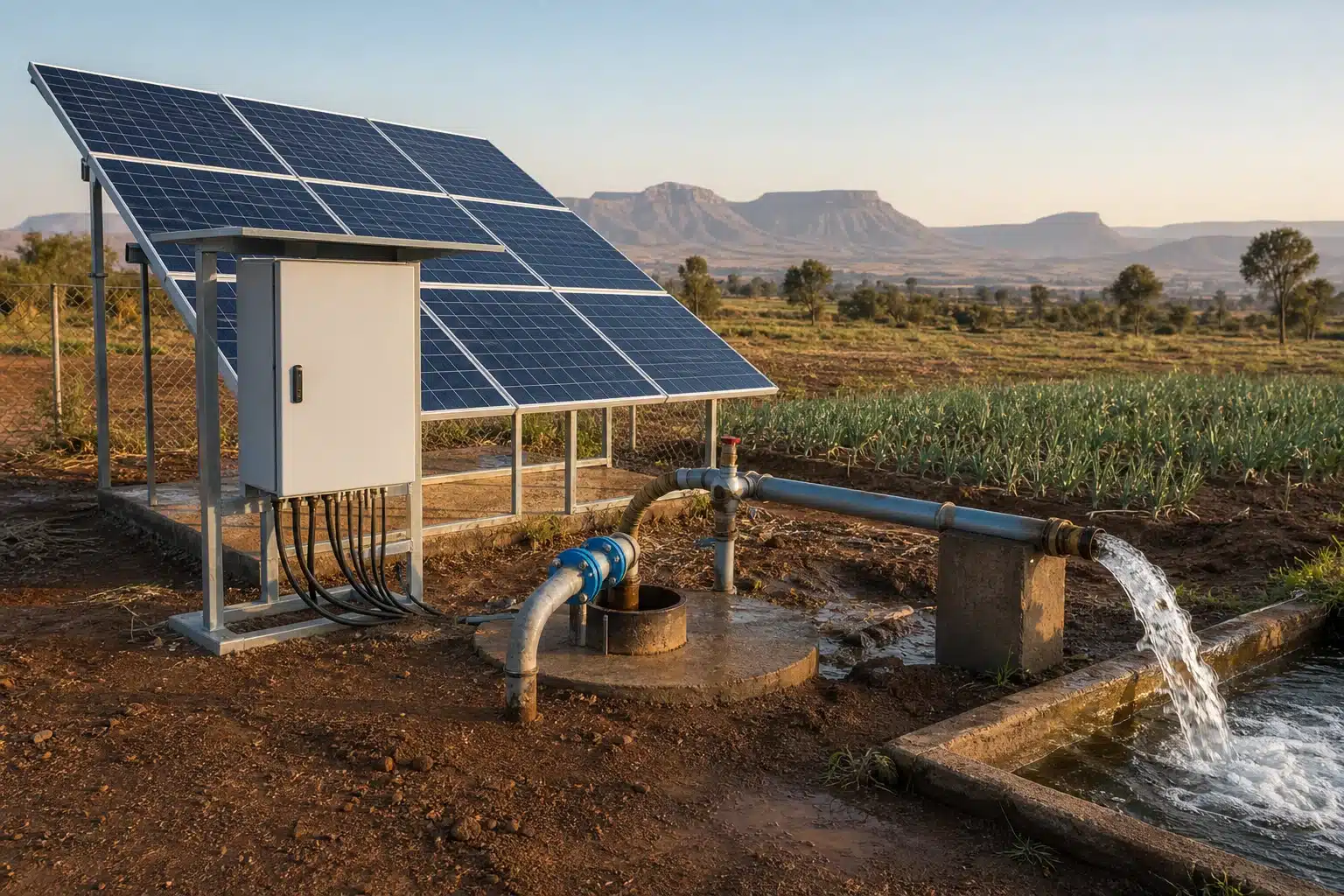
Many Ethiopian irrigation and community water projects are far from a distributor’s workshop. The project cost therefore includes more than the PV array and pump. It includes the number of visits required to diagnose faults, the stock of replacement parts, the quality of the wiring record and the ability of a local technician to separate a hydraulic fault from an electrical fault.
A useful commissioning pack should include a one-line diagram, motor data, inverter settings, dry-run test results, water-level sensor logic, fault-code explanations and a list of spare parts. The technician should know what happens after an underload trip, how the restart delay works and how to prove that the borehole has recovered before restarting the pump.
Dry-run protection is especially important when pumping from a deep or seasonal water source. A motor can be electrically healthy while the pump is running without enough water. If the protection is not tested during handover, the first real test may be a damaged pump after the installer has left.
Altitude and Long Cable Runs Need Early Review
Altitude changes the engineering margin. For sites above 3,000 metres, HOBER project rules require a power-grade review and, where the calculation requires it, moving up one inverter power class or applying a 1.25 power reserve. The final decision must use the actual product derating curve, ambient temperature, motor load and installation conditions. It should not be hidden in a sales promise.
Cable distance also needs to be measured along the real route. A cable longer than 50 metres requires a voltage-drop review. Above 100 metres, evaluate an output reactor. Above 200 metres, evaluate a sine-wave filter to reduce stress on motor insulation and the output waveform. These thresholds are project checkpoints, not a replacement for a calculation. They are valuable because they force the accessory discussion before the cable is buried.
Mozambique: The Maintenance Route Is Part of the Pump System
Mozambique has a different project pattern. Public records and development-programme material show solar irrigation, rural water supply and pay-as-you-irrigate models. UNGM records include a solar-based irrigation business model connected with women’s empowerment, water management and food security. Futurepump also maintains a Mozambique market presence and has described cooperation with SolarOn! and other local agricultural solar channels.
The commercial lesson is straightforward: local delivery and maintenance are part of the product. A pump that performs well in a factory test can still become a poor project choice if the spare controller, sensor or fan is not available when the site is unreachable. A proposal for a remote Mozambican installation should therefore state the maintenance route, local training, spare-parts responsibility and the information that must be recorded during a service visit.
Rural water systems also have a wider boundary than a pump. The design may include a borehole, submersible pump, PV array, controller, HDPE pipe, storage tank, distribution line and community operating procedure. If the supplier quotes only the pump while another contractor owns the water-level logic and tank control, the system can fail between scopes.
Humidity, Salt Air and Dust Are Slow Failure Mechanisms
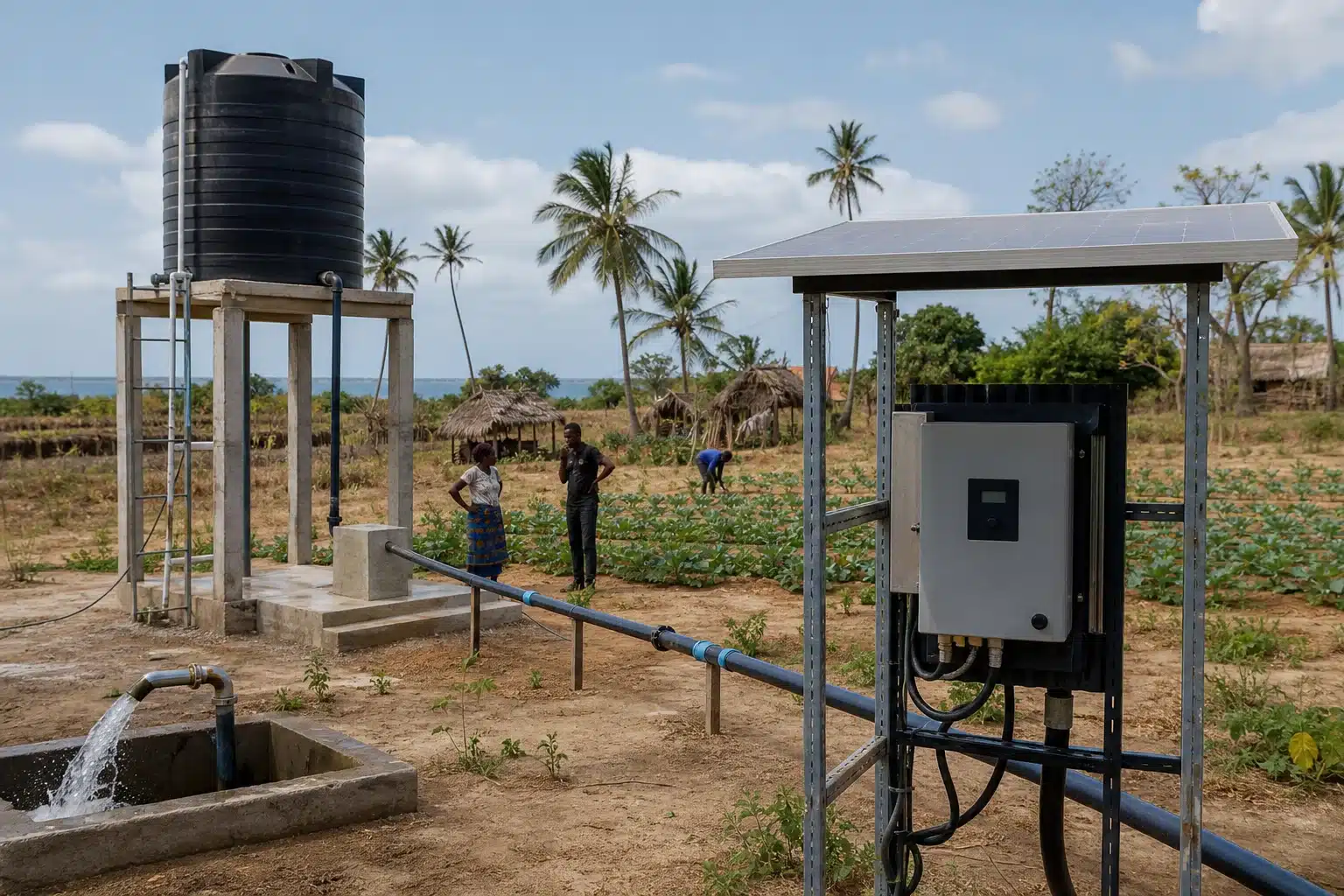
Coastal and river-mouth locations bring a combination of humidity, salt residue and dust. These conditions can attack terminals, connectors, fans and communication equipment. The fault may not be dramatic. A terminal develops resistance, the controller runs hot, and the pump trips only during peak load.
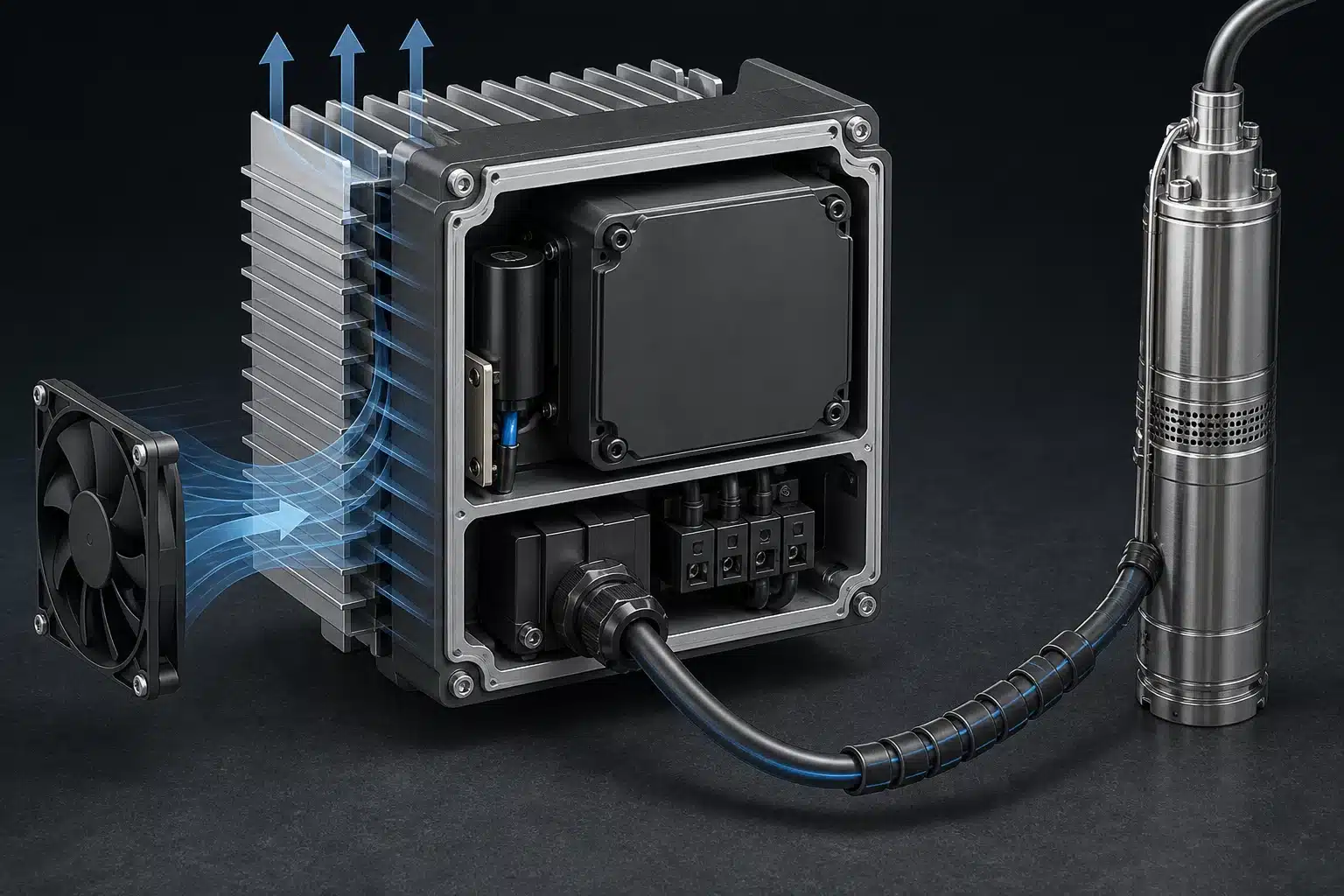
HOBER’s design position is an IP65 sealed enclosure that keeps the main board area isolated from the outside environment while an external fan and heat-sink structure move heat away from the electronics. The cooling route and the contamination barrier solve different problems. The installer still needs correct cable glands, sealed entries, suitable earthing, clean mounting and inspection of the external cooling components.
The triple-cooling arrangement combines natural aluminum housing cooling, an independent external fan and dual heat-sink structures. It is not a substitute for a shaded, correctly mounted cabinet. Its purpose is to create a practical maintenance boundary: the external cooling path can be inspected without exposing the main board area to the surrounding dust and humid air.
AC Pump Solarization: Retain the Useful Assets
Replacing every old pump is not always the best technical or commercial answer. A project may already have a good borehole, a functioning pump, a discharge pipeline and civil works. AC Pump Solarization begins by measuring the existing three-phase AC pump and deciding whether it can be controlled and protected by a solar pumping inverter.
The process is disciplined:
- Record the motor nameplate and test operating current.
- Confirm the actual pump curve, flow and total head.
- Measure static and dynamic water levels.
- Inspect motor insulation and cable condition.
- Calculate the PV and inverter operating range.
- Review voltage drop and long-cable protection.
- Install and test dry-run, tank-level and restart logic.
- Compare the retrofit scope with a full pump replacement.
This method gives the EPC contractor a defensible reason for each accessory. It also gives the end user a clearer choice: keep the productive assets that are still sound, replace the components that are actually limiting performance, and use the inverter as a controlled protection layer rather than as a magic fix.
How HOBER Should Position Against Existing Brands
Futurepump, Impact Pumps SolarPlex, Lorentz and local distributors already give buyers recognizable alternatives. HOBER should not answer this competition with a general claim that its pump is “high quality.” The technical wedge is different.
For Ethiopia, lead with AC pump solarization, high-altitude selection review, long-cable engineering and distributor training. The target conversation is with irrigation integrators and local solar companies that need to reduce site visits while keeping their project scope clear.
For Mozambique, lead with remote-site maintenance, IP65 isolation, external cooling serviceability, Portuguese and English documentation, and a complete spare-parts plan. The target conversation is with rural-water contractors, NGO suppliers, agricultural channels and local solar installers.
What Belongs in the EPC Proposal
- Confirmed hydraulic duty point and marked assumptions;
- Motor and inverter compatibility record;
- Static and dynamic water-level data;
- Dry-run, underload, overload and restart settings;
- Real cable route and voltage-drop calculation;
- SPD, fuses, earthing and cable-entry specification;
- IP65 enclosure and external cooling inspection method;
- Local spare-parts list and training scope;
- English or Portuguese documentation according to the project;
- Clear responsibility for drilling, civil works, pump installation, PV structure, wiring and acceptance.
Do not promise a fixed payback period without diesel consumption, operating hours, water volume, pump efficiency, PV conditions and local service costs. The correct financial model should be built from the project’s measured data. A short quotation may look attractive, but an unpriced site assumption becomes an EPC margin problem later.
Before you issue the EPC quotation
Send the motor nameplate photo, pump curve, static and dynamic water levels, pipe length, cable route and target daily water volume. We will help separate the hydraulic assumptions from the inverter and protection requirements.
Send project data to HOBER · Read the AC Pump Solarization Academy
Final Field Rule
In Ethiopia, solarization must replace fuel without creating a new maintenance burden. In Mozambique, solarization must deliver water after the installation team has left and the site becomes difficult to reach. In both countries, the safest design begins with measurement, protection and a clear service boundary.
That is the purpose of Academia de Solarización de Bombas de CA: to connect the existing pump, inverter, PV array, water-level signals, cable design and maintenance plan into one engineering decision.
HOBER distributors and EPC partners can build the next project around a simple question: can the existing AC pump be measured, controlled and protected well enough to run from solar? If the answer is yes, the project can often avoid an unnecessary replacement and put more of the budget into water delivery, protection and long-term serviceability.
Have a project to review?
Send the pump model, power, head, flow, borehole depth, water level and cable length. If you are replacing a diesel pump, include current fuel use and operating hours. HOBER will help you check the solarization route before you commit to the equipment list.
Related HOBER resources can support solar pump inverter selection, AC pump solarization engineering y remote irrigation system planning.