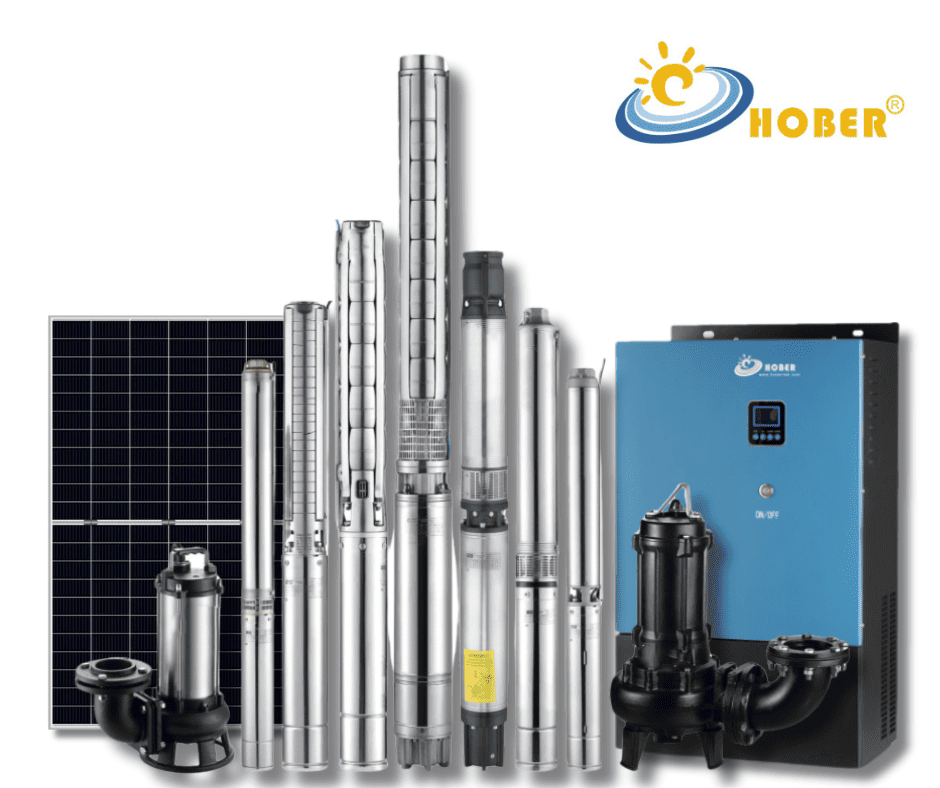
Pakistan is currently experiencing unprecedented climatic shifts. In the critical agricultural belts of Sindh and Southern Punjab, summer temperatures frequently exceed 52°C (125.6°F), placing immense thermal stress on essential water infrastructure. As the country moves toward solar-powered irrigation to mitigate rising grid tariffs and fuel costs, the technical challenge has shifted: it’s no longer just about making the pump spin; it’s about keeping it running when the desert air is hot enough to melt standard electronics. Hobertek’s Solarisation des pompes à courant alternatif model, powered by our Triple-Cooling IP65 architecture, provides the engineering resilience required to survive Pakistan s most extreme summers. This whitepaper analyzes the thermodynamic challenges of the Sindh heatwave and details the ROI economics of converting existing 3-phase AC pumps to solar power.
1. The Heat Crisis: Understanding Thermal De-rating in Pakistan
The primary point of failure for solar pumping in Pakistan is Déclassement thermique. Most standard solar inverters utilize internal fans that draw hot, dusty air directly through the core. At 50°C ambient, these units hit their internal temperature threshold (125°C junction temp) within 30 minutes of peak-noon operation. The software automatically reduces the output frequency to prevent failure, leading to a 30-40% drop in water yield exactly when evaporation rates are highest. For a commercial sugarcane or wheat farm in Sindh, this loss of water can cripple the harvest.
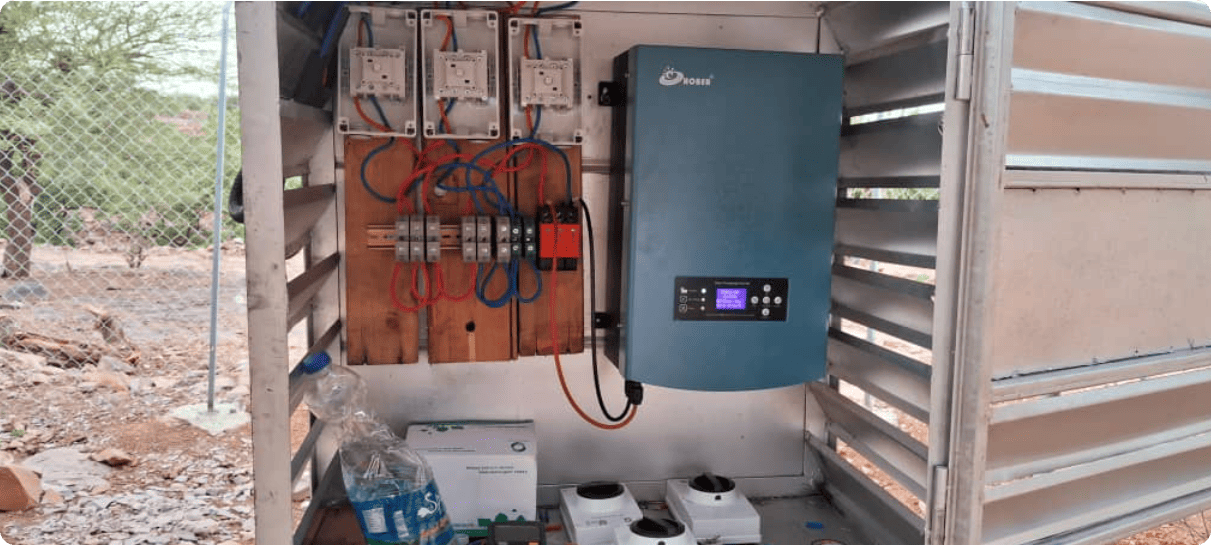
Hobertek Architecture à triple refroidissement eliminates this bottleneck. By utilizing a high-conductivity aluminum enclosure and directed external forced convection (fans blowing exclusively over external fins), we maintain full torque output at 55°C. Étanche comme un sous-marin, refroidie comme un moteur de course.
2. The Solarization Model: Modernizing Pakistan s Existing AC Pumps
Pakistan has millions of installed 3-phase AC water pumps currently running on an unstable grid or expensive diesel generators. Replacing these pumps with DC-native units is often cost-prohibitive. Hobertek’s Solarisation des pompes à courant alternatif model allows EPC contractors to integrate a high-performance solar array directly with the existing AC motor. Our HSPH inverters are pre-programmed with the load curves of industrial 4SP and 6SP motors, ensuring that the transition from solar power is seamless, protecting the motor insulation from harmonic stress and extending asset life by over 30%.
3. Dust and Silt Defense: IP65 Sealing for the Thar Desert
The agricultural heartlands of Pakistan are characterized by fine, silty dust that is both abrasive and electrically conductive. Standard inverters, which rely on internal air exchange, act as vacuum cleaners for this dust, leading to internal short-circuits. Hober’s Architecture étanche IP65 creates a total atmospheric barrier. By encapsulating all sensitive electronics in a precision-cast compartment, we ensure that conductive particles never touch the circuits, extending the operational life of the project to over 15 years.

4. ROI Analysis: The Financial Blueprint for Pakistani EPCs
For a Pakistani commercial farm owner, switching to Hober solar power is a strategic financial hedge against rising energy costs. By eliminating fuel logistics and reducing maintenance man-hours by 80%, the initial hardware investment is typically recovered within 12 to 18 months. Reinvesting these savings into improved seeds and irrigation infrastructure creates a positive feedback loop for farm expansion.
Pakistan’s solar revolution is underway. Don’t waste your budget on modular units that fail when the heat hits. Consult with Hobertek’s technical team and request a customized TCO analysis for your next Pakistan project today.