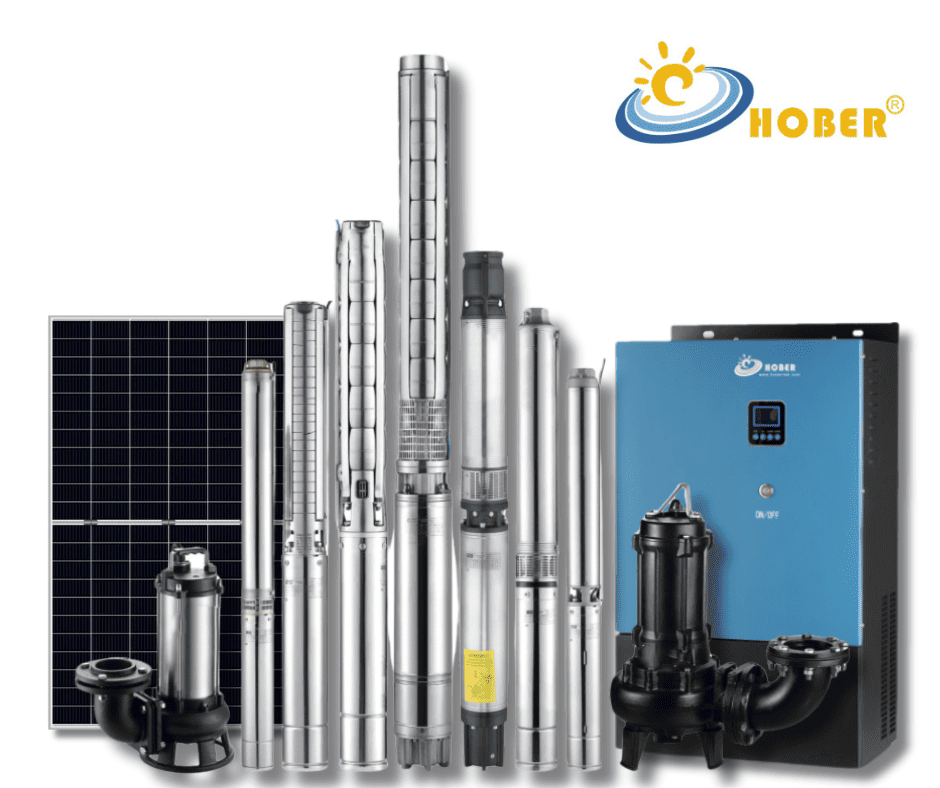
The Democratic Republic of the Congo (DRC) is currently at a critical junction in its infrastructure development. As the national mandate for rural electrification and drinking water access accelerates, the reliance on traditional diesel-powered boreholes has proven to be a logistical and financial liability. In August 2026, multiple tenders have been issued for the construction of solar-powered drinking water supply systems in remote provinces. For EPC contractors and NGOs, the challenge is clear: how to build a system that can survive in high-humidity jungle environments with zero local maintenance support. Hobertek’s technical response integrates Thermodynamic Isolation 和 Adaptive Power Redundancy, creating an ‘Install and Forget’ standard for the Congo Basin.
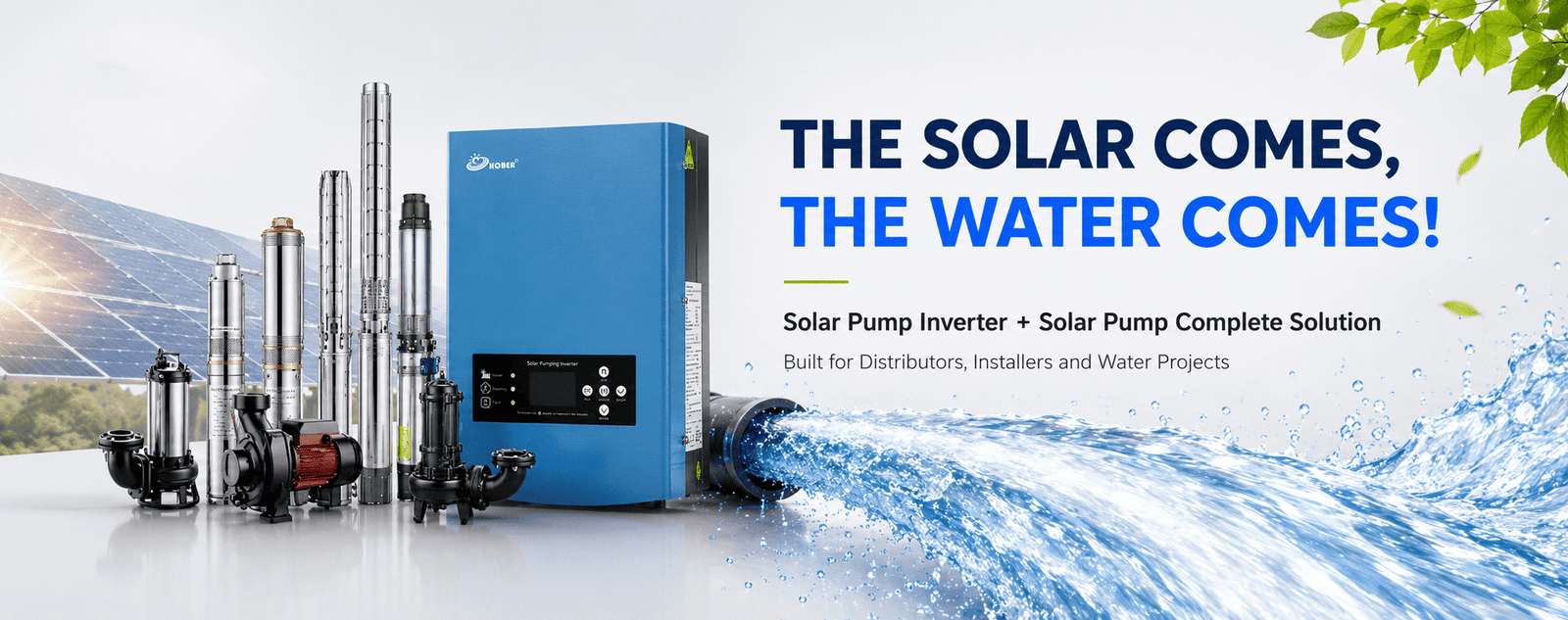
1. Solving the Humidity Crisis: IP65 Sealing in the Tropical Zone
In the DRC, relative humidity frequently exceeds 95%. Standard ventilated inverters are doomed in this environment. The internal cooling fans draw in moisture-laden air, which triggers 电化学迁移—the growth of conductive dendrites across PCB traces. This leads to catastrophic circuit failure within one rainy season. Hobertek’s HSPH series utilizes a Fully Sealed IP65 Aluminum Enclosure. We do not use internal air for cooling. Instead, heat is conducted through high-density aluminum heatsinks to the external environment, where a directed forced convection fan maintains optimal operating temperatures without exposing the internal electronics. This is the same ‘Submarine Standard’ we deploy for monsoon-resilience in Bangladesh.
2. Adaptive Power: Managing Dynamic Static Head and Yield
Boreholes in the DRC often experience significant seasonal fluctuations in water table depth. A pump designed for the dry season may face motor overload or inefficiency during the peak rains. Hobertek’s Andean Engineering Standard, originally developed for 秘鲁, mandates a 1.25x power factor redundancy. Our advanced MPPT algorithms handle high inrush torque and provide a ‘Soft Start’ that preserves the mechanical integrity of the pump seals—a critical factor when the nearest replacement part is 500km away through undeveloped terrain.

3. The 12-Month ROI: Economic Modeling for NGOs and Municipalities
For a community water project in the DRC, the ROI is not just financial; it is a measure of human impact. However, the fiscal argument is undeniable. By replacing diesel generators with a Hober solar retrofit—utilizing our 交流泵太阳能化 technology—operational costs are reduced by 90%. This allows for initial CAPEX to be recovered within 12 months based on current fuel logistics costs. To support project bankability during long funding approval cycles, Hobertek offers a Strict 7-Day Price Lock Agreement against LME copper fluctuations, a commitment already detailed in our South Sudan Survival Whitepaper.
4. Marine-Grade Defense: AISI 304/316 Stainless Steel Integration
Many DRC boreholes are located in alluvial plains with high silt and sediment concentration. Standard cast-iron pumps suffer from rapid impeller abrasion. Hobertek integrates Marine-Grade Stainless Steel for our 4SP and 6SP pump series, ensuring that the system survives the abrasive physical environment of the Congo Basin. When combined with our IP65 inverters, we provide a unified solution that is truly ‘fit-for-purpose’ for the world’s most challenging geographical zones.

Conclusion: Securing the Heart of Africa’s Water Future
In the Democratic Republic of the Congo, a water system that works is a foundation for peace and productivity. Hobertek’s focus on IP65 sealing, power redundancy, and stainless steel durability ensures that our systems remain operational long after the installation team has departed. We don’t just sell solar pumps; we build the enduring water infrastructure of the Congo Basin. Contact the Hobertek technical team for specialized DRC system sizing and procurement support.