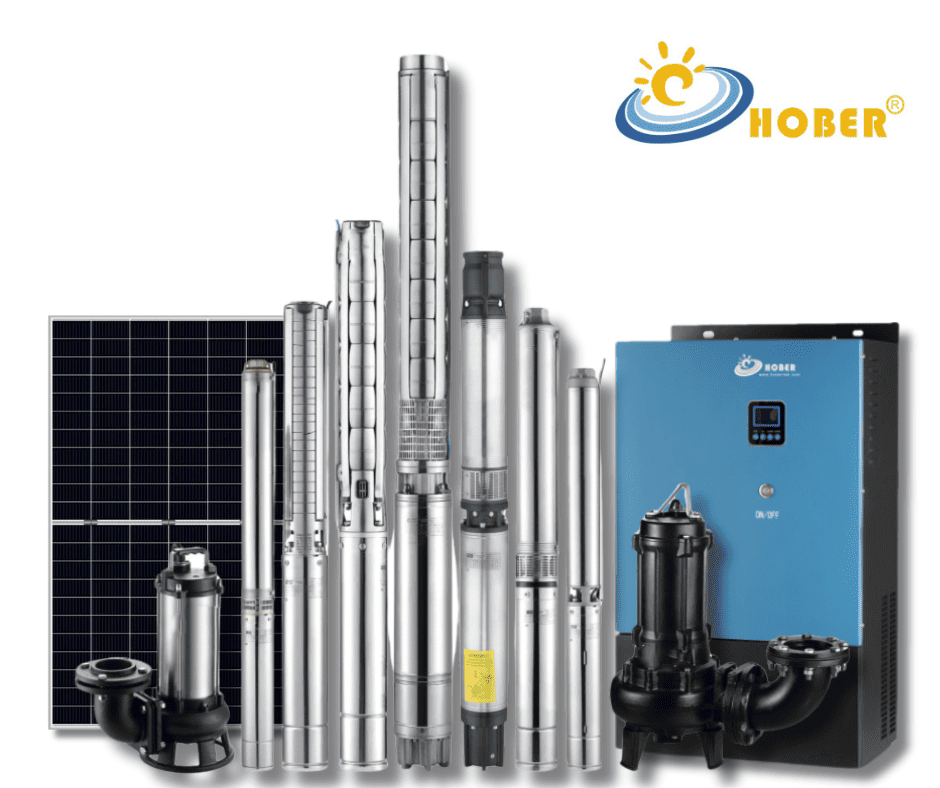
Bangladesh is currently witnessing one of the most ambitious agricultural transformations in Southeast Asia. As the government moves to transition over 1.34 million diesel-powered pumps to solar energy, the industry spotlight has landed squarely on AC Pump Solarization. For large-scale rice cooperatives and commercial fish farms in the delta regions, the ability to solarize existing AC water pumps without replacing the expensive motor infrastructure is the key to achieving a sub-12-month ROI. However, the tropical environment of Bangladesh—characterized by 95% humidity, frequent lightning, and abrasive silt—is a graveyard for standard modular inverters. Hobertek’s HSPH Series with IP65 Sealed Architecture is the engineering answer to Bangladesh s 2026 solar revolution.
1. The Solarization Model: Modernizing Existing Infrastructure
Most large-scale irrigation in Bangladesh already utilizes 3-phase AC submersible or surface pumps. Replacing these entire assets is often cost-prohibitive for farming cooperatives. Hobertek’s AC Pump Solarization model allows contractors to integrate a high-performance solar array directly with the existing AC pump. Our HSPH inverters are pre-programmed with the load curves of industrial 4SP and 6SP motors, ensuring that the transition from a noisy generator to silent solar power is seamless, protecting the motor insulation from harmonic stress and extending asset life by over 30%.
2. Humidity Defense: Why IP65 Sealing is Mandatory in the Delta
The primary cause of inverter failure in the Bangladesh Delta is PCB Corrosion. Standard VFDs (Variable Frequency Drives) utilize internal fans that draw the humid, often saline-heavy air directly into the unit. During the monsoon, moisture condenses on the electronics, leading to catastrophic short-circuits. Hobertek’s IP65 Fully-Sealed Aluminum Architecture creates an airtight barrier. By isolating the sensitive power modules in a precision-cast compartment, we ensure that the humidity never touches the internal circuits. Heat is dissipated through external heatsinks and directed fans, providing a maintenance-free design that outlasts generic brands by over a decade.

3. Surviving the Lightning Season: Level-2 Protection
Bangladesh suffers from one of the highest lightning frequencies in the world. For projects involving clusters of interconnected pumps, a single atmospheric surge can cripple the entire cooperatives production. Hobertek HSPH inverters integrate Level-2 Industrial Surge Protection (SPD) on both the DC and AC inputs. This built-in defense mechanism clamps voltage spikes in nanoseconds, protecting the IGBT power modules without the need for expensive secondary protection boxes.
4. Maximum Yield: High-Efficiency MPPT for Cloudy Monsoon Conditions
For Bangladeshi rice farmers, water output is the only metric that matters. During the cloudy monsoon gaps, standard inverters often struggle to extract enough power to start the pump. Hober’s proprietary Rapid-Tracking MPPT Algorithm achieves 99% accuracy, ensuring that the pump starts earlier in the morning and continues running through intermittent cloud cover, increasing daily water yield by up to 20% compared to generic solar controllers.

5. ROI Case Study: Diesel to Solar Transition
For a typical Bangladeshi cooperative using 7.5kW diesel-driven surface pumps, the switch to Hober solar power offers a fixed-cost energy baseline. With the current spike in global fuel prices, the initial hardware investment is fully recovered within 10 to 14 months through fuel savings alone. Hobertek provides local partners with full technical documentation, including localized ROI models and CAD wiring diagrams to support bid submissions for regional development projects.
Modernize your irrigation. Download the Hober AC Pump Solarization Whitepaper and request a custom Bangladesh project quote here.