Sustainability in the Horn of Africa: A Technical Whitepaper on Off-Grid Community Water Solutions in Ethiopia - Hober

Sustainability in the Horn of Africa: A Technical Whitepaper on Off-Grid Community Water Solutions in Ethiopia

Sustainability in the Horn of Africa: A Technical Whitepaper on Off-Grid Community Water Solutions in Ethiopia

Ethiopia is currently facing a dual challenge: an ambitious drive for agricultural mechanization and a critical need for reliable rural water access. In regions such as Oromia, Amhara, and the Southern Nations, the expansion of commercial farming and community drinking water schemes is often hindered by a lack of stable grid infrastructure. Historically, diesel generators were the primary energy source for water pumping, but rising fuel costs and complex logistics have rendered these systems unsustainable for both smallholders and large-scale projects supported by NGOs. Hobertek’s HSPH Series Hybrid Solar Inverters are designed to solve this energy crisis by providing a rugged, high-efficiency, and intelligent energy management system tailored for the unique conditions of East Africa.

Hober solar surface pump system for community water
Hober surface pumping systems are ideal for the expansive landscapes of rural Ethiopia.

1. The Off-Grid Challenge: Beyond Simple Solar Pumping

While simple solar water pumps are a common sight in Ethiopia, many fail to meet the continuous water demands of larger communities or commercial irrigation projects. Purely solar-powered systems are limited to peak daylight hours, which often results in insufficient daily water yields during cloudy periods or high-demand seasons. To bridge this gap, Hobertek has pioneered Hybrid Hybrid Energy Management, allowing for the simultaneous integration of multiple energy sources.

In the Ethiopian context, this means that a single Hober HSPH inverter can manage inputs from a solar array, a backup diesel generator, or even a local micro-grid. The system prioritizes solar power, but if the radiation drops below the required threshold, it automatically draws precisely the required amount of supplementary power from the AC source. This ensures that a community of 1,000 people has a consistent water supply 24 hours a day, regardless of weather conditions.

2. Technical Reliability for Remote NGO Projects

Many water projects in Ethiopia are funded by international donors and NGOs who demand a high return on social investment and minimal maintenance overhead. Remote sites in the Afar or Somali regions are difficult to access for repairs, making the “Install and Forget” design philosophy essential. Hober’s technical edge lies in its industrial-grade protection:

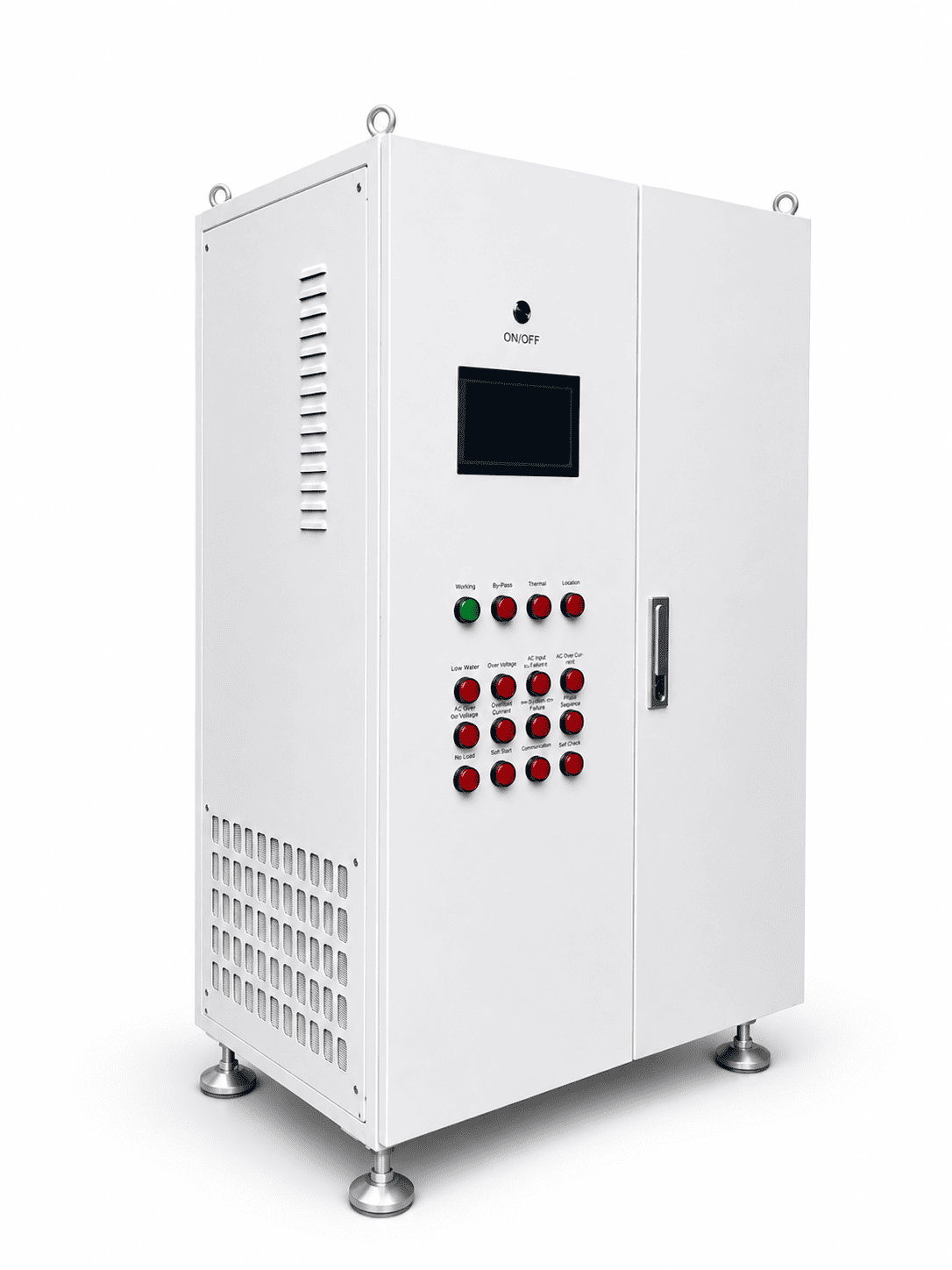
Hober Solar Pump Control Cabinet for borehole systems
Rugged Hober Control Cabinets provide Level-2 protection against lightning and electrical surges.
  • IP65 Full Sealing: Unlike competitors that use internal fans (which eventually clog with the fine basaltic dust found in much of Ethiopia), Hober uses a fully sealed aluminum enclosure. This prevents internal contamination and significantly extends the life of the electrolytic capacitors.
  • Built-in Level-2 Surge Protection: The Ethiopian highlands are prone to sudden electrical storms. Hobertek integrates high-performance Surge Protection Devices (SPD) on both the DC and AC sides, guarding the inverter against atmospheric overvoltage that would otherwise cripple a project.
  • Dry-Run Protection Algorithms: Water tables in the Rift Valley can fluctuate seasonally. Hober software constantly monitors the load on the submersible pump motor, automatically shutting down the system if it detects a dry borehole, thus preventing catastrophic pump failure.

3. High-Efficiency MPPT for Variable Radiation

Radiation patterns in Ethiopia can vary significantly from the sunny lowlands to the often-misty highlands. A standard inverter’s MPPT (Maximum Power Point Tracking) can lose up to 15% of total energy yield during variable conditions. Hober’s proprietary Rapid-Tracking MPPT Algorithm achieves 99% accuracy by sampling the PV curve every few milliseconds. This ensures that every available photon is converted into water flow, which is critical for projects operating on limited solar budgets.

Hober high-power solar pump system
Hober’s high-horsepower systems can drive massive pumps for commercial-scale Ethiopian irrigation.

4. Engineering ROI: Calculating the Payback in the Ethiopian Market

For agricultural investors in Ethiopia, the switch to a Hober solar solution is a calculated financial move. When comparing a 7.5kW diesel-driven pump with a 7.5kW Hober solar system, the Total Cost of Ownership (TCO) reveals a clear winner:

Expense Item (3-Year Period)Diesel-Powered PumpHober Solar Hybrid
Fuel & Logistics CostsETB 450,000 – 600,000ETB 0 (Solar Priority)
Oil & Filter MaintenanceETB 60,000ETB 0
Labor for Fuel TransportETB 30,000ETB 0
Total 3-Year Operational SpendETB 540,000+< ETB 5,000 (Monitoring)

In most commercial scenarios in the Oromia region, the initial hardware investment is fully recovered within 14 to 18 months, after which the water supply becomes essentially free of charge.

5. Partnering for the Future of Ethiopian Agriculture

Hobertek is committed to providing more than just hardware. We offer Ethiopian EPCs and NGOs a full Technical Support Pack, including localized CAD wiring diagrams and ROI models tailored to the ETB (Ethiopian Birr) currency and local fuel rates. Our goal is to empower local developers to build the most resilient water infrastructure in East Africa.

Looking for a reliable solar pumping partner in Addis Ababa or beyond? Request a detailed technical consultation and project quote here.
Facebook
Twitter
LinkedIn
WhatsApp
Reddit

Solar Pump Specialist

We are experts in solar pump industry. If you think you have a problem with it call us for a free, no-obligation, quote.

Subscribe to our newsletter.

alt="Hobertek Solar AC Pump | Solar Water Pump Manufacturer"

REQUEST A QUOTE

*Your email information is completely secure and will not be disclosed to third parties for any reason.